

Blog
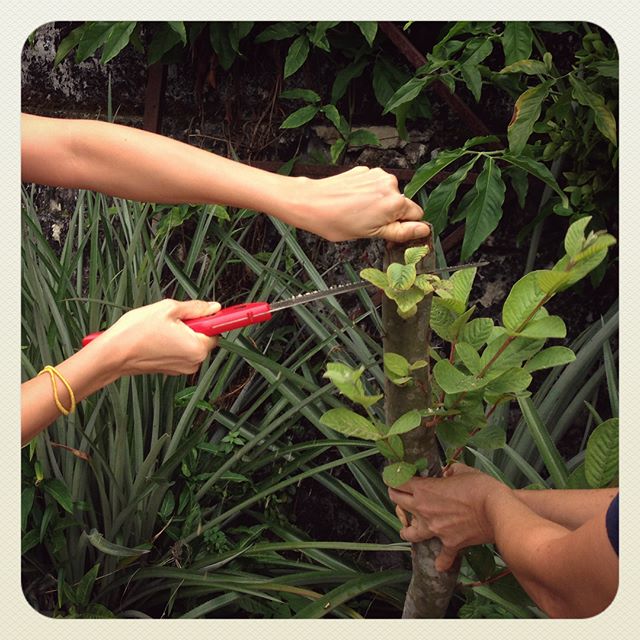
Our Saturday was well spent with a morning gardening workshop at our Gasing garden with certified arborist, Nik Ikmal Fathi, who gave us an intro to edible tropical trees & showed us how to care for trees the right way 🌳🌲🌳 How did you all spend your long weekend? #eatsshootsandroots #garden #green #trees #workshop
Blog
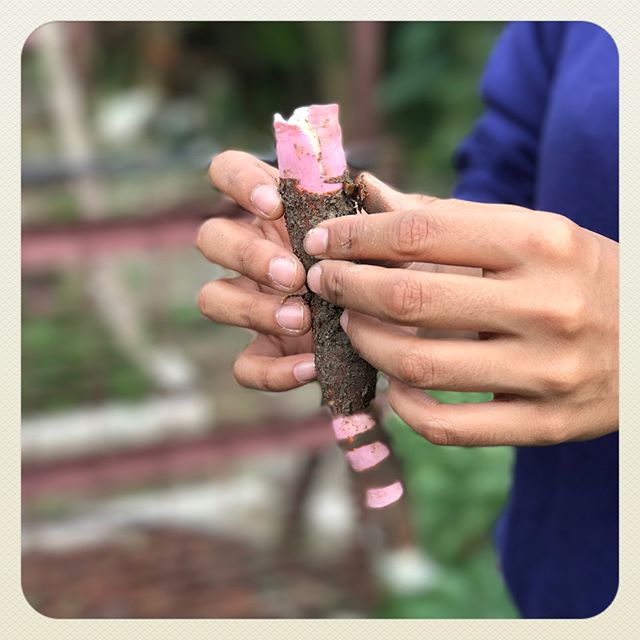
#ESRHarvest: Ubi Kayu (Cassava).Also known as Tapioca or Yuca, this plants are widely grown in Malaysia. The plant prefers well-drained soil and modest rainfall but it can survive where soils are wet which is why they thrive in our weather. Their roots contain 30 percent starch and are high in carbohydrates. The roots are usually prepared and eaten like potatoes while the leaves can be boiled and eaten as Ulam or can be cooked in coconut gravy (i.e. Pucuk Ubi Masak Lemak). Kuih Bingka Ubi and Lepat Ubi are some of the common local delicacies that uses cassava roots. How do you cook your Ubi Kayu? #eatsshootsandroots #cassava #ubikayu #growyourown #organic #urbanfarm #kebun #malaysia
Blog
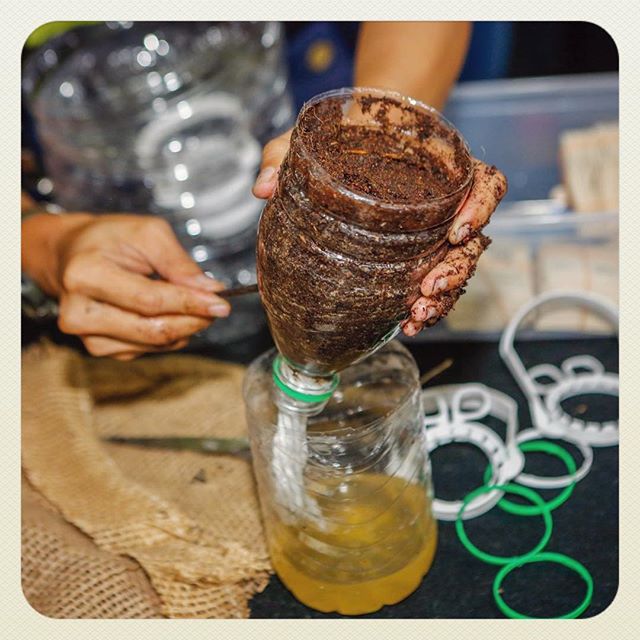
“How To… Garden In A Bottle” | READY, SET, GROW! – 5th Issue, July 2017 [LINK IN BIO]–INGREDIENTS:Plastic bottleCutterNail punchCotton wickMasking tapePotting soilPlant cuttings/seedsLight-proof material (eg: jute, felt, thick paper)–METHOD:1. Cut bottle in half. -2. Make five drainage holes (about 1cm in diameter) around the neck of the bottle from the inside. Hold the piece tightly and use the nail punch to make the holes. -3. Insert the cotton wick and guide it out through the bottle’s neck. -4. Place this into the bottom half of the bottle. Make an overflow hole in the bottom half of the bottle below where the neck of the top half sits (separate the halves to do this, then put them back together). This will allow excess water to flow out as too much water can rot the roots of some plants. -5. Tape the two pieces together with masking tape to secure their positions. -6. Fill the top half with potting soil and then insert the seed/cutting. To get the capillary action going, water from the top until water flows out through the overflow hole in the bottom half of the bottle. -7. Wrap the whole container in lightproof material (cloth/jute/paper); this is to prevent algae from growing within the container. -8. Keep the container away from direct rain. Keep the top moist and compost-fed.– Learn more on how to make your own garden in a bottle in Star2, The Star #eatsshootsandroots #garden #seed #plant #ReadySetGrowESR #HowTo #TheStar
Blog
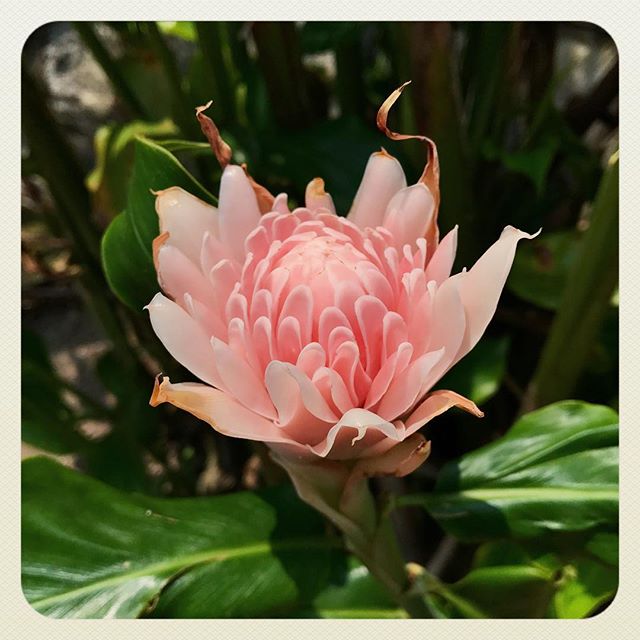
Shooting straight up from the ground topped with layers of bright pink, red or white petals, this tropical perennial plant is called Bunga Kantan or Torch Ginger. It is an indispensable ingredient in Malay and Nyonya cuisine, where the buds are used to zest up curries and seafood stews. This fresh spice has the power to mask strong fishy taste as it does in the famous Penang Asam Laksa. So how do you use your Bunga Kantan? #eatsshootsandroots #torchginger #food #spices #malaysia #garden #growyourown #green #bungakantan #ESRHarvest
Blog
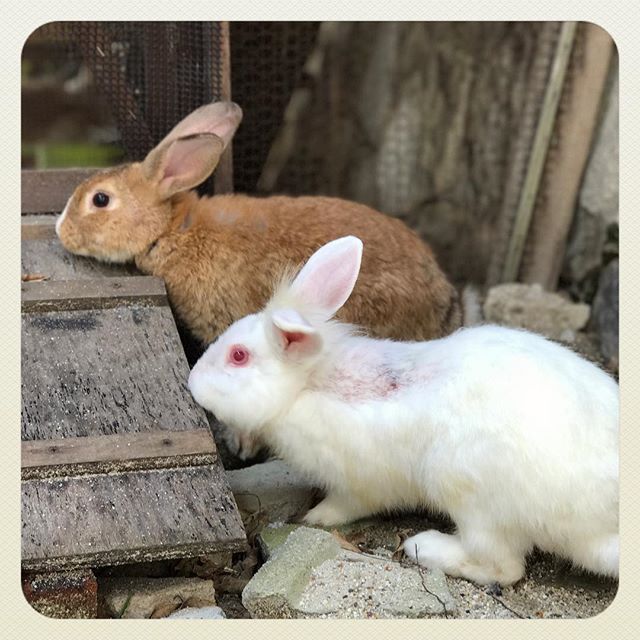
We have new additions to our small family in Gasing! We adopted these cuties from @misdeeds_ last week to see if they could help us weed the garden. They’re happily hopping around in our garden, sniffing out the open buffet. Safe to say they’re in literal food heaven Any suggestions on what to name them? #eatsshootsandroots #bunnies #bunniesofinstagram #rabbit #garden #malaysia #green

Blog
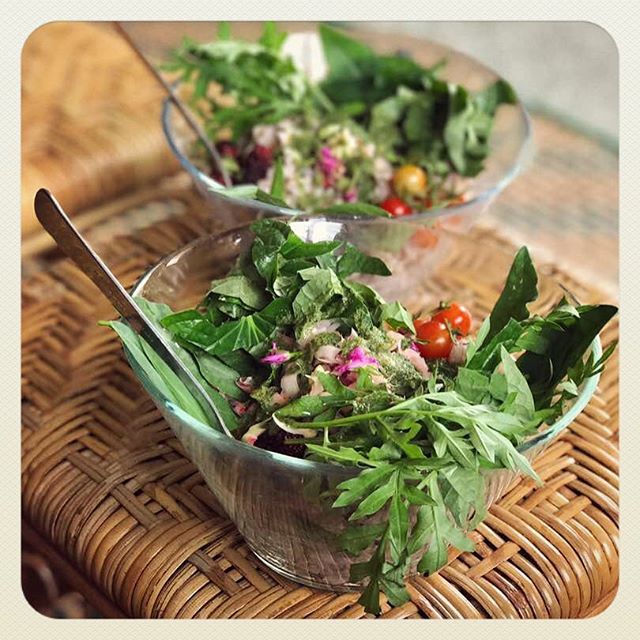
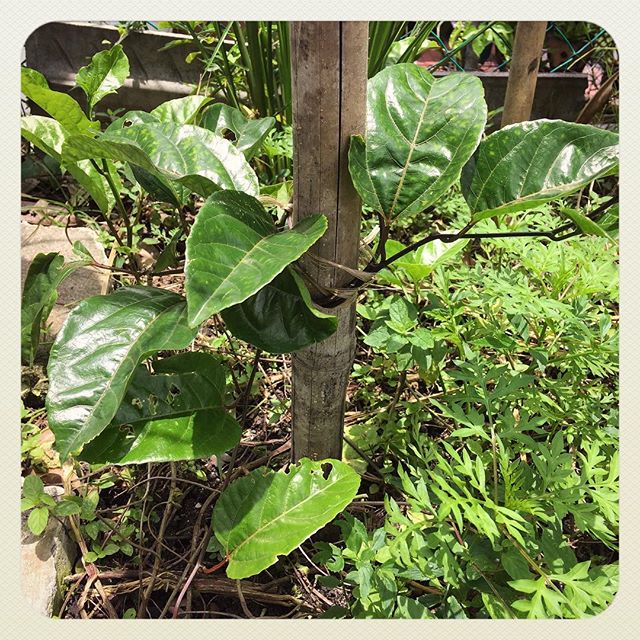
Edible garden volunteers at the Kebun Kebun Bandar project in Bangsar today. First time we had done a “Yes-Dig” Garden as opposed to a “No-Dig” Garden in a while Set up some Grow Tongs together with the volunteers and planted in some hardy perennials veg, which will hopefully be getting enough sky juice in the next couple of weeks.

Blog
Q: I have a passion fruit plant in a big pot and it produced two fruits a few months ago. Since then, there have been no sign of fruit production. I would love to know how often these plants bear fruits, and what can I do to encourage healthy growth and production. – Janis Lee-A: Passion fruit trees can be a challenge to grow as they require careful pruning and training to ensure they grow well and bear fruits. They are also susceptible to diseases. Prune the tree once it reaches the desired height, then keep pruning off the top to encourage lateral growth. Remove excessive side growths.You do not want to have entangled, messy side growths. The idea is to have a few main side growths that will have ample space to grow. You also have to train the branches so they will grow along the netting or wire mesh you have set up.Fertilise the tree four times a year. Give as much nitrogen as potassium but less phosphorus. Follow the instructions as recommended by the fertiliser bag and adjust accordingly with your yields. Avoid over-watering by watering only when the top soil is dry.-Find out more in our Ready, Set, Grow! column in Star 2 – The Star [link in bio!]-If you have any gardening questions, send your queries to http://questions.eatsshootsandroots.com-* All questions are answered by Dr Christopher Teh, soil biologist and senior lecturer at Universiti Putra Malaysia #eatsshootsandroots #DearPlantDoctor #ReadySetGrowESR #TheStar #garden

Blog
Q: I tried growing a papaya tree a few times with no success. My attempts produced a tree but before fruiting, the top core leaves will distort and turn yellow, then die off after one week. Why is this happening? – Danny Sao-It is difficult to diagnose your problem without seeing the full scale of it. Your papaya trees could be infected by a virus transmitted by whiteflies that causes leaf curling (distortion), especially near the tree top. My advice is to remove the latest infected tree and discard it by burying it very deep into the soil or chopping it then burning it up. Do not compost it.Note that leaf curl treatment, which involves spraying with dangerous dimethoate and monocrotophos pesticides, can be costly especially just for one tree.-Find out more in our Ready, Set, Grow! column in Star 2 – The Star [link in bio!]-If you have any gardening questions, send your queries to http://questions.eatsshootsandroots.com-* All questions are answered by Dr Christopher Teh, soil biologist and senior lecturer at Universiti Putra Malaysia #eatsshootsandroots #DearPlantDoctor #ReadySetGrowESR #TheStar #garden
Blog
Q: I have a pumpkin plant in my garden that produced two to three baby pumpkins – roughly ping pong ball size – at a time but after two weeks, the pumpkins turned yellow and dropped off. This has happened a few times. Why is this happening and what can I do about it? – Tan Hon Yin-A: Over-watering (as well as under-watering) your trees can cause fruit drops. You should only water it when the top soil is dry. Too much water can drown the roots and cause root rot and no fruit to form.Another possible reason is your fertilisation. Fertilise less with nitrogen and more with potassium and phosphorus. You can even include calcium in your fertilisation programme.-Find out more in our Ready, Set, Grow! column in Star 2 – The Star [link in bio!]-If you have any gardening questions, send your queries to http://questions.eatsshootsandroots.com-* All questions are answered by Dr Christopher Teh, soil biologist and senior lecturer at Universiti Putra Malaysia #eatsshootsandroots #DearPlantDoctor #ReadySetGrowESR #TheStar #garden
Blog
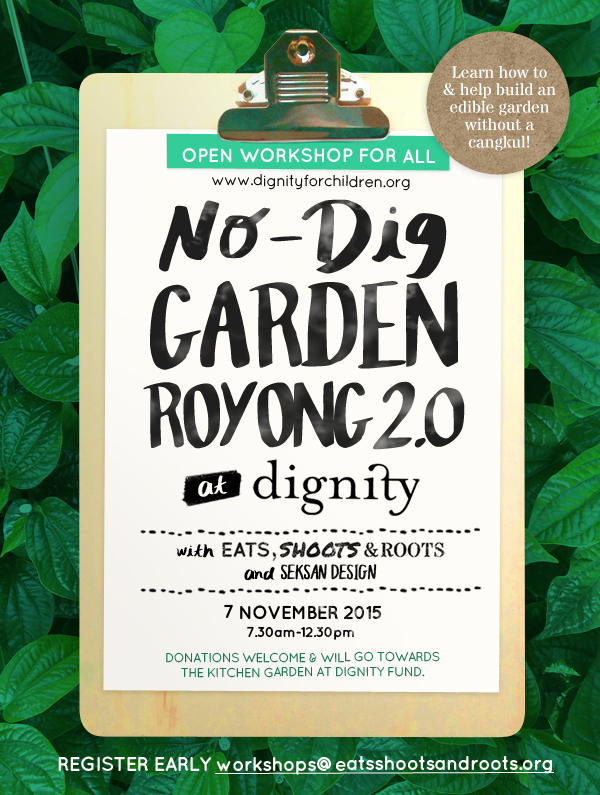
7 Nov 2015: No-Dig Garden Royong 2.0 @ Dignity
7 November 2015 No-Dig Garden Royong 2.0 @ Dignity Learn how to build a garden without a cangkul![divider top=”0″] We’re back with another No Dig Garden Royong! The first Garden Royong went really well and the garden is doing really great. This time around, we want to finish up more Read more…

Blog
Working through the holidays for our chickens
Making the use of the holidays to do some building! Pictured here, Beli and Tiffany putting up the wood frames for the integrated #chicken & #bunny #coop. We will be fencing up the area on the left to give them free roaming space.

Blog
Found! Roadside Slabs!
Found these slabs at the side of the road over the weekend, as they were breaking up the pavement to do some construction work, so we thought we would give them a new home as our Edible Garden #Nursery flooring.
Blog
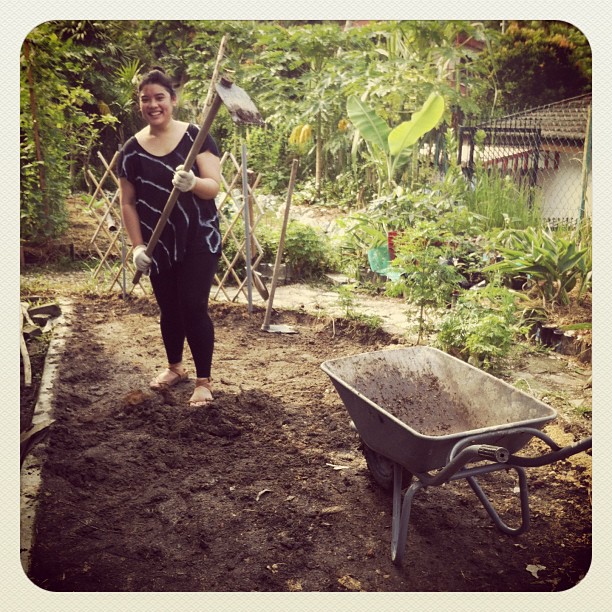
Jehan doing some prep work for the foundation of our new nursery space
Jehan doing some prep work for the foundation of our new edible garden nursery space, the area that used to be occupied by our makeshift #nursery made out of pallets. It will be the new upgraded home to our future veggie babies to keep them happy. Watch this space…

Blog
Instagram Updates
Big thanks to Jehan and Nadirah, Dan and John (who are not in this photo because they were scouting the neighbourhood for some unwanted pieces of concrete drain slabs for reuse in our garden) for volunteering to help with some building this morning! Plus special thanks to the ever lovely Read more…

Blog
Edible Garden Nursery Construction Kicks Off
Sabina and Tiffany are getting psyched up to get rid of our old makeshift nursery and begin construction works for our proper Edible Nursery. Tomorrow, they kick off with laying the foundational groundwork which will involve lots of digging and hauling stuff in wheel barrows…which will go on for several Read more…
Blog
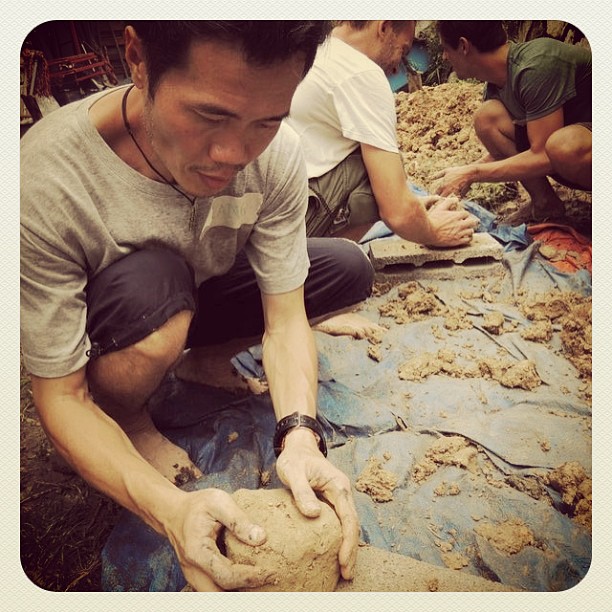
Cob Oven Workshop: Moulding team hard at work.
The moulding team hard at work! Pictured here is , moulding away… #coboven #workshop
